
Lexington Lookup Sources Compared
No official all-resident database exists for Lexington. Pick the source that fits the fact, keep its date, and confirm the match elsewhere. A current voter entry answers a different question than a recorded deed or court docket. Business and license searches confirm a public role. They will not confirm a home address.
When online tools stay unclear, use the full access chain. Fayette court clerks can name the custodian for a case file. The Kentucky Room, KDLA, KHS, and FamilySearch can locate older dockets, wills, orders, and court books. Vital-record questions go by phone, mail, dropbox, or in person. The responsible state or county office handles those. Voter-file logistics route through the Fayette Clerk or the State Board of Elections. Name the record type, person, date range, county, and any known file number in each request. Include any known file number too. That detail helps staff tell a missing index entry from a closed, expunged, archived, or differently spelled record. It also keeps a Lexington name search tied to its real source.
| Record | What It Confirms | Official Keeper | Access |
|---|---|---|---|
| Voter status | Current registration and polling details | Kentucky Voter Information Center | Free individual lookup |
| Court index | A named party and case locator | Kentucky Court of Justice and Fayette clerk | Free guest search; copies from custodian |
| Vital record | A recorded life event | Kentucky OVS or Fayette clerk | Index and copy routes differ |
| Property record | Parcel owner, situs, and assessment context | Fayette PVA, GIS, and County Clerk | Online, counter, and copy request |
| Public credential | Entity role or listed license | Secretary of State or licensing board | Free public search |
Start a Lexington resident lookup with the narrowest identifier that fits the sound of the name. Full name plus birth date suits voter or court searches. A parcel number is stronger for land, and a case number wins in court. For older people, a year and a historical spelling can lead to directories, newspapers, wills, and archive files.
Lexington Voter Lookup Fields
The Kentucky Voter Information Center asks for legal first name, last name, and date of birth in MM-DD-YYYY form. The last four Social Security digits stay optional. A match shows current registration, polling place, and absentee status. It does not prove who occupies a home. It offers no past voter trail.
| Field | Required | Format or Use |
|---|---|---|
| First Name | Yes | Legal first name |
| Last Name | Yes | Legal surname |
| DOB | Yes | MM-DD-YYYY |
| SSN Last4 | No | Four digits in the official form |
KRS 116.095 sets the rule. Registration records may be inspected and copied during reasonable hours, with Social Security numbers redacted. Broader data is not an open download. SBE-84 goes only to qualified statutory users who state a scope and swear against commercial use. Orders can follow geography or output format. Fayette election questions go to the County Clerk at 162 East Main Street.
Confirming Names in Lexington CourtNet
CourtNet public access opens through “Public Records as Guest.” Party searches accept party type, case type, county or statewide scope, names, birth date, event range, active-case status, and a sounds-like control. Names need at least three characters. Case number, citation, and business-name routes offer other paths.
A result may show a case overview, party details, next event, status, and clerk contact tools. It is a locator, not the certified file. Alerts do not prove conviction or present residence. The cleanest match uses county plus case number. A request to the Fayette Circuit or District Clerk completes it. The Fayette court page lists the Circuit Courthouse at 120 North Limestone and District Court at 150 North Limestone.
The CourtNet guest screen displays the public entry used for a Lexington resident lookup. Its fields set the first filter on a name.
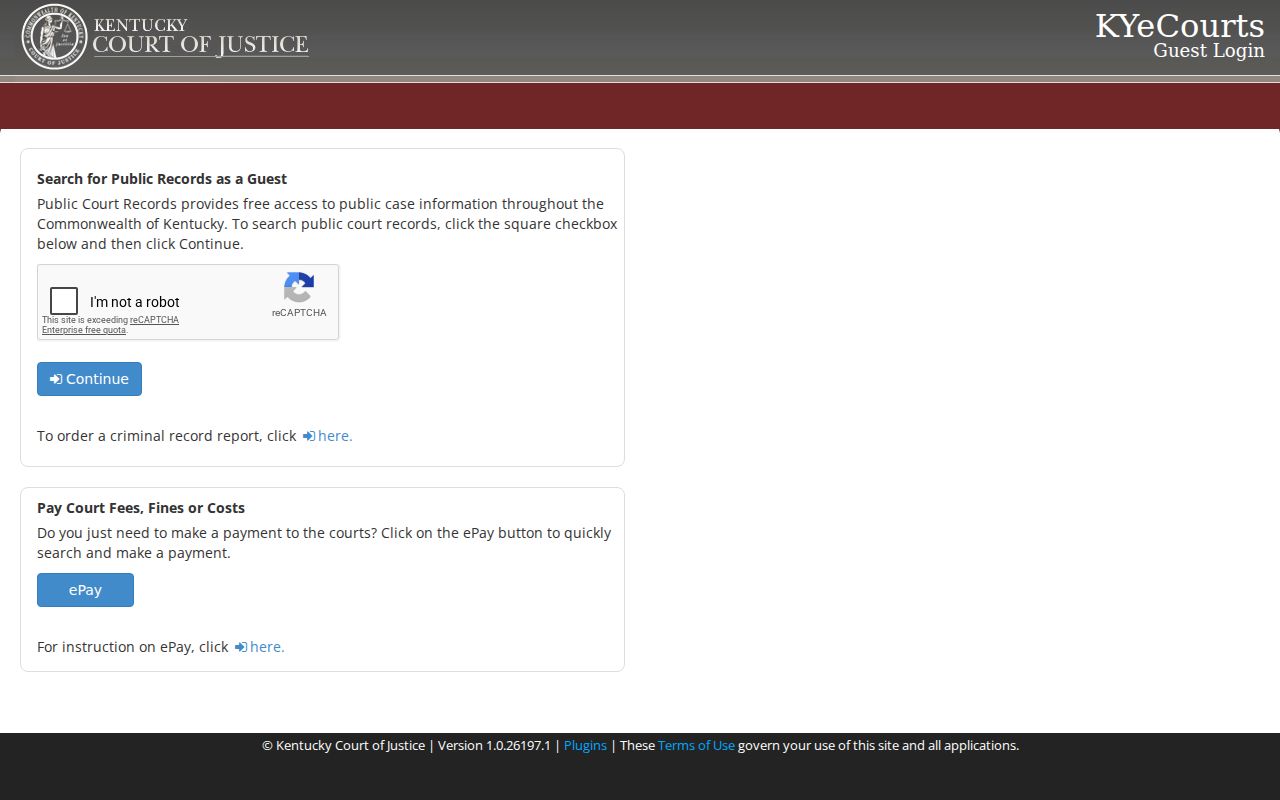
A name hit on the guest screen settles little on its own. Confirming that the case belongs to the right person takes identity checks, and a clerk-issued copy whenever the record matters.
Verify Lexington Resident Records
Two records should agree. Lexington systems join facts differently. Voter status turns on legal name and birth date, court files on party name and county, land on parcel number, and vital records on event facts. Mailing address, parcel situs, owner, and occupant stay separate facts.
- Start with the exact name, approximate age, address, parcel number, historical year, or public role already known.
- Anchor the name to one dated official record. Use voter status, a parcel, an entity filing, or a license only for its stated purpose.
- Search CourtNet with Fayette County and name variants. Narrow by birth date, event range, case type, or case number.
- Compare a second independent source. Preserve the source, search date, spelling, county, and record number.
- Ask the custodian for a complete or certified copy when the document itself matters.
- Docket
- A court's running list of filings and events in a case.
- Index vs image
- An index points to a record; an image shows a filed document.
- Certified copy
- A copy authenticated by the office that keeps the original.
This habit blocks the same-name trap. A bare name can point to an alias, an old case, an estate, or another county. For parcel context, use the Lexington street directory to keep that work distinct.
Lexington Vital Index Limits
Kentucky central birth and death coverage begins in 1911. Central marriage and divorce records begin in June 1958. Earlier Fayette marriages go to the County Clerk. Earlier divorces go to the Circuit Clerk. Under KRS 213.131, births stay closed for 100 years and deaths for 50. Public annual indexes locate events, but an index is not a certificate or proof of current residence.
The Office of Vital Statistics purchase route lists $10 birth copies and $6 death, marriage, and divorce copies. Mail, dropbox, in-person, and an authorized online or phone vendor all work. Mail or dropbox may take 30 working days. Forms require event facts, requester contact and relationship, payment, and a signature. Older genealogy searches may need KHS, KDLA, the Kentucky Room, FamilySearch, or county offices.
The state purchase page shows the official order choices.
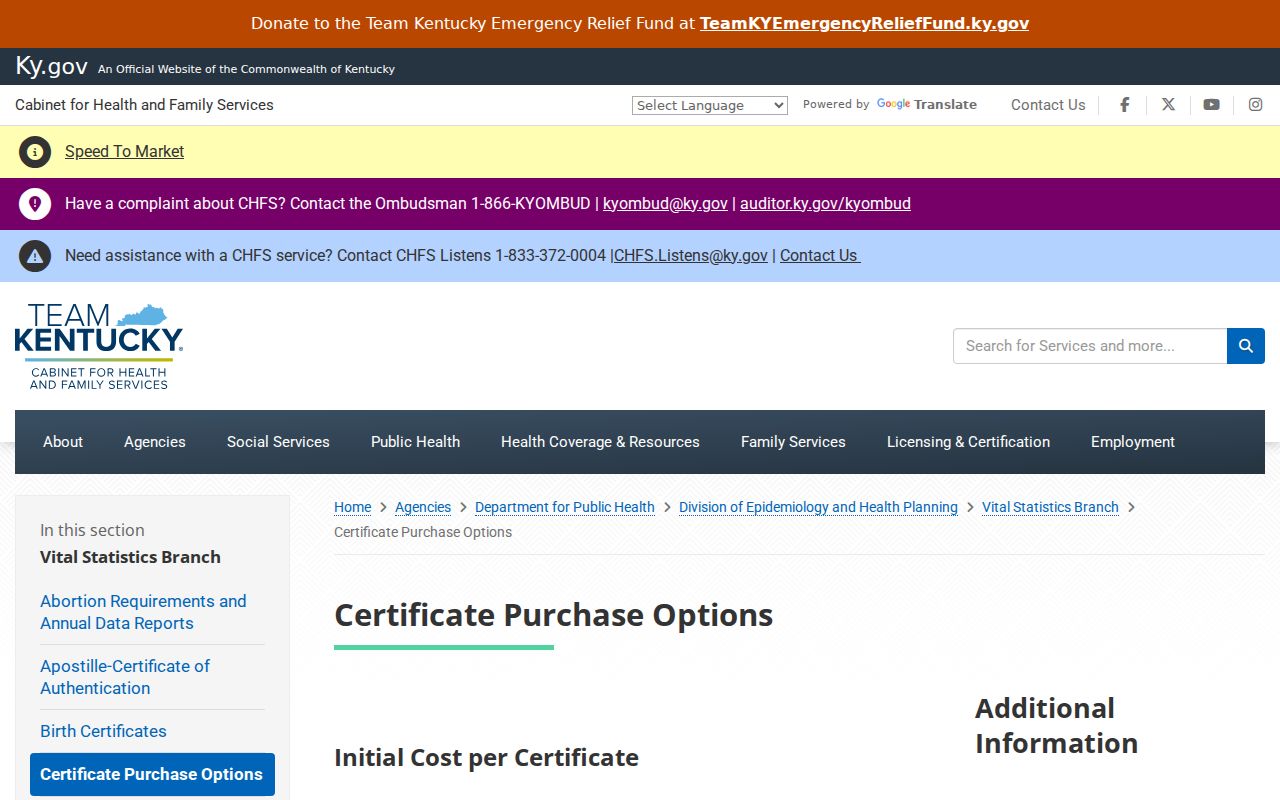
The order screen changes no closure rules. Use the index first, then request only the copy the law permits.
Lexington Heirs and Public Roles
Probate research in Lexington follows a paper trail. The trail runs through Fayette will books, court orders, deeds, guardians books, land partitions, and probate indexes. Find the entry first. Then request the exact file from the clerk. A named heir or personal representative is an estate clue. It is not proof of where anyone lives today. Some historic volumes sit in DAP page images, the Kentucky Room, KDLA, KHS, or FamilySearch rather than a free index.
Adoption works differently. Adult adoptees 21 or older have a formal route through the Kentucky Adoption Services Branch. Kentucky-finalized adoption records stay sealed, though. Court forms, fees, written requests, non-identifying information, and consent rules all shape that process. It is not a general person finder. Lexington publishes no citywide alumni roster. Former classmates surface instead through dated yearbooks, school directories, newspapers, cemetery material, and library holdings.
Public roles call for different tools. The Secretary of State entity search confirms status, agent, officers, and filings. The professional license lookup lets you query by board, status, name, license number, city, state, or ZIP code.
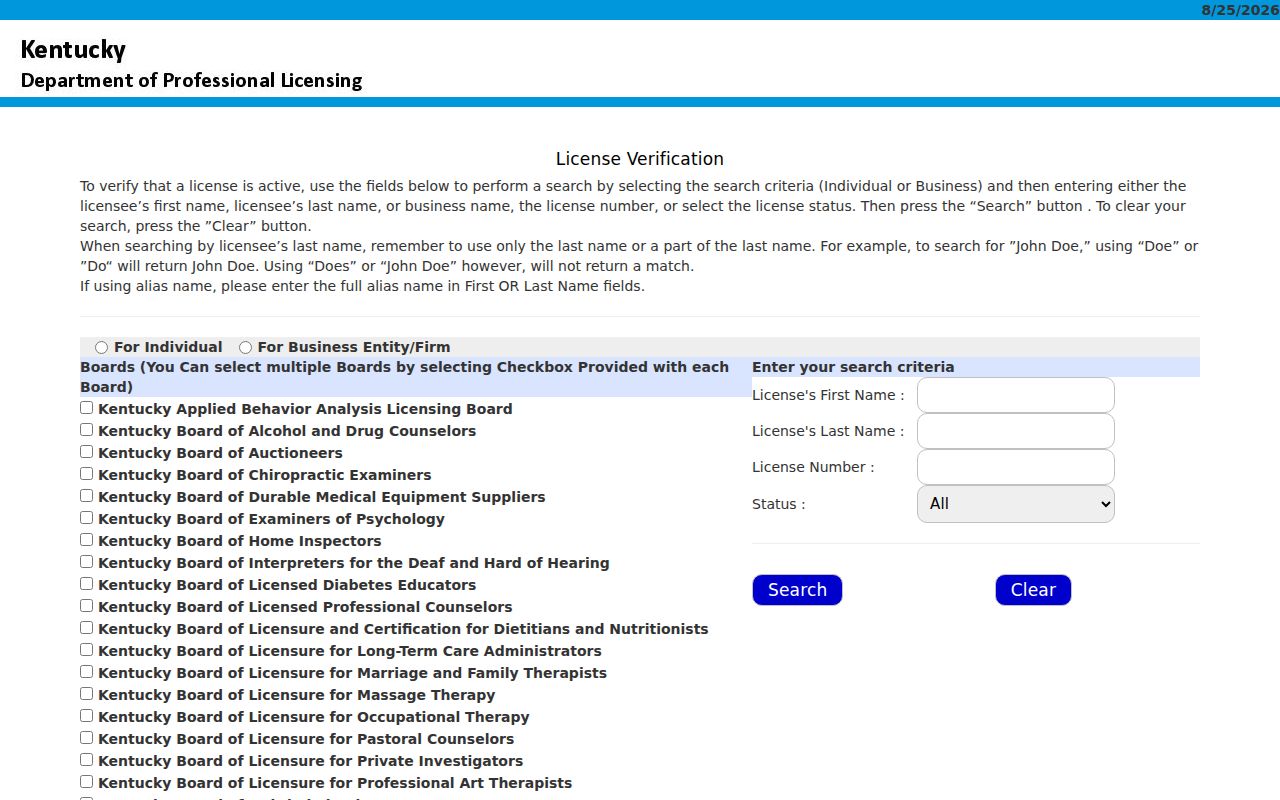
A credential confirms the listed professional record, not a home address or current presence.
When Lexington Lookups Return Nothing
A blank Lexington resident lookup can mean many things. Try an alternate spelling or a former legal name. Check that you have the right county, a revised date range, and the correct custodian of the record. Some court files are juvenile, sealed, restricted, or expunged. A vital record may still be closed by law. Portals lag. Older material may survive only in a clerk book or an archive box.
Never fill the gap with an unverified commercial profile. Call the clerk when a case-name match is unclear. For a specific city record that exists, the Lexington open-records hub routes written requests, and Kentucky residents must describe the record they want. The city generally answers within five business days. The Kentucky Open Records Act compels no new list of people and cannot override a closure.
The city request screen stands in where no public name index exists.
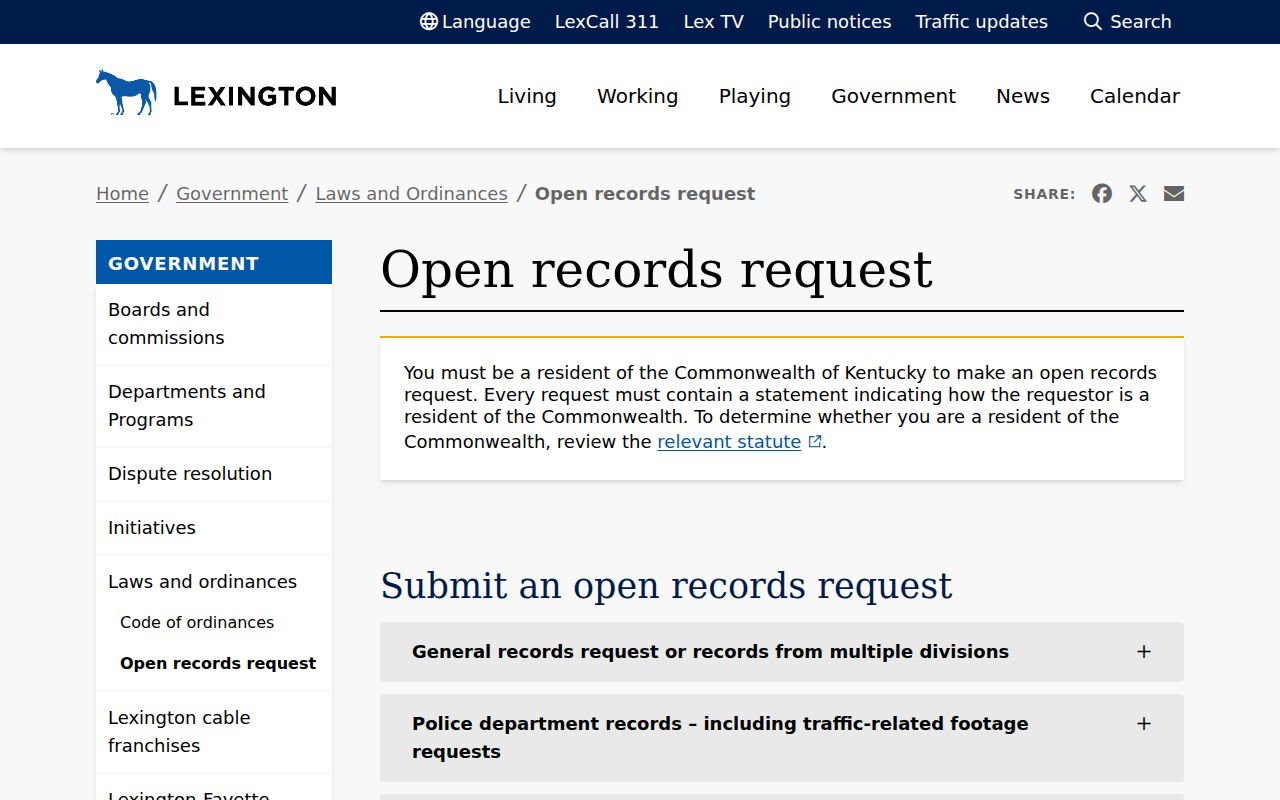
Ask for one named record, a date range, or a file number. A focused request beats asking an office to build a residents directory list for you.
Lexington Resident Lookup Privacy
Kentucky Safe at Home supplies a substitute address and mail forwarding for qualifying survivors. Agencies accept that address except in limited statutory cases. Never try to reverse it through parcel history, neighbors, alternate names, or outside profiles. The Secretary of State Safe at Home office handles the protected process.
The Kentucky Consumer Data Protection Act took effect January 1, 2026. It grants rights against covered private businesses, yet public records fall outside its covered-data definition. Safe at Home, sealed, juvenile, vital, voter, and court protections all remain intact. Corrections and withholding requests go to the custodian of each record. No single form removes a person from every Kentucky record.
Lawful use. Use Lexington records for lawful personal research. Never use a resident lookup to stalk, harass, intimidate, or expose a protected person.
Record the date and source. A result is a dated locator, not a full personal profile, so never infer sensitive traits or a current home from unrelated filings.